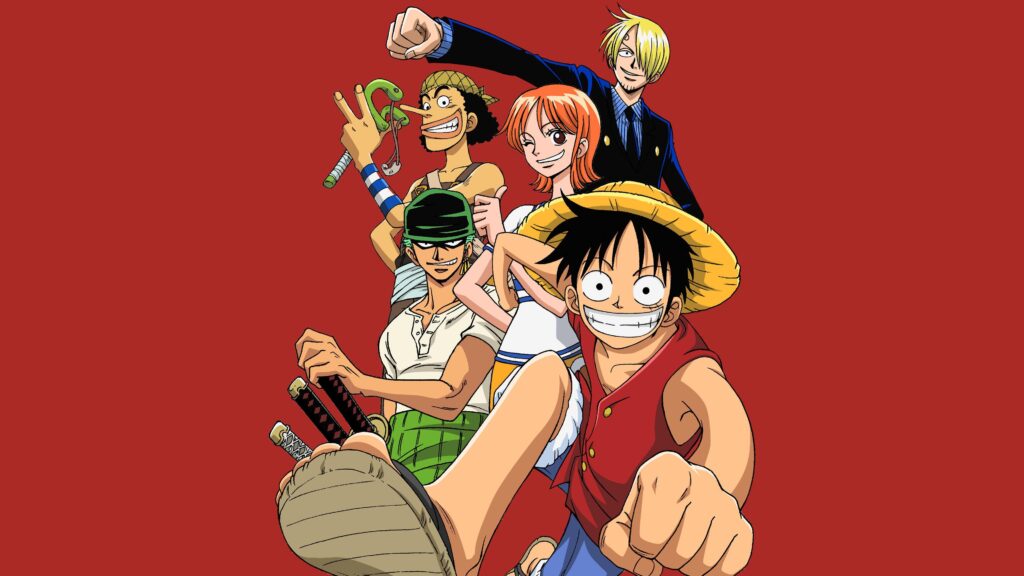
One Piece anime poster featuring Luffy and his Straw Hat Pirates (Toei Animation). Created by mangaka Eiichiro Oda, One Piece is a Japanese manga series that debuted in Weekly Shōnen Jump in 1997. It quickly became a hit, and in 1999 Toei Animation began producing the anime series. The story follows rubber-bodied pirate captain Monkey D. Luffy and his eclectic crew, the Straw Hat Pirates, as they journey across the Grand Line in search of the legendary treasure known as “One Piece.” Luffy’s dream is to become the next King of the Pirates by finding this treasure, fulfilling a promise to his childhood idol Shanks. Running for over 25 years and spanning more than 1100 manga chapters and episodes, One Piece has become one of the most beloved anime/manga franchises ever. It has earned widespread praise for its storytelling and world-building, and is officially the best-selling manga series of all time. This success led to countless adaptations: 14 animated films, TV specials, video games, and even a top-rated 2023 Netflix live-action series. In fact, Netflix reported that the One Piece adaptation was the most-watched Netflix TV show in late 2023, drawing over 71.6 million views in one period.
Origin and Concept
Eiichiro Oda conceived One Piece as a pirate adventure with broad appeal. In a 1997 debut issue of Weekly Shōnen Jump, Oda introduced Luffy as a cheerful boy who gains the powers of rubber after accidentally eating a Devil Fruit. The manga began serialization in July 1997, and the anime premiered two years later, adapting the early chapters into dynamic animated episodes. One Piece’s premise a whimsical pirate world with comic humor, fantastical powers (Devil Fruits and Haki), and grand quests captured readers’ imaginations immediately. Oda’s art and storytelling quickly became known for energetic, exaggerated designs and epic scope. As the story progressed, it embraced themes of friendship, freedom, and pursuing dreams, resonating with both children and adults.
From its inception in Weekly Shōnen Jump to today, One Piece has enjoyed constant popularity. Guinness World Records notes that One Piece “has made history by breaking the record for most copies published for the same comic book series by a single author”. By 2022 it had over 516.6 million copies in circulation worldwide, surpassing every other manga and comic series. Editor Yoshihisa Heishi of Weekly Shonen Jump even received a Guinness certificate on Oda’s behalf in 2022, celebrating this milestone. Oda has stated that the story is finally in its final saga and is expected to conclude around 2025, giving fans a clear sense of the narrative’s grand scope from beginning to end.
Plot Overview
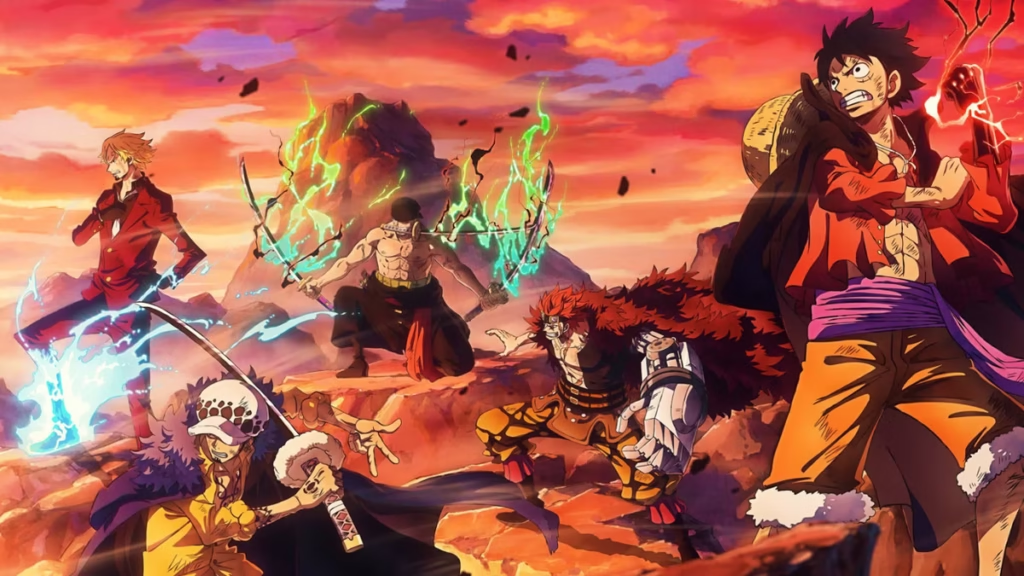
One Piece is an epic adventure with a simple core goal. The Straw Hat crew sails from island to island on their ship (the Going Merry, then Thousand Sunny), facing pirates, Marines, and mysterious challenges along the way. Each island or sea they visit is a new “arc” in the story. Generally, an arc begins when Luffy and his friends arrive at a new locale and end when they depart, having resolved the main conflict there. (For example, after leaving one island, the current arc closes and a new one starts.)
The first arc, Romance Dawn (Episode/Chapter 1-7), introduces Luffy and his quest, along with Red-Haired Shanks and the straw hat he gave Luffy. Early arcs (all part of the East Blue Saga) show Luffy recruiting his core crew members: swordsman Zoro, navigator Nami, sharpshooter Usopp, and cook Sanji. These arcs pit Luffy’s nascent crew against local threats (like the fish-man pirate Arlong) and end with each character fully on board the Straw Hat ship.
Subsequent major sagas take the crew into the Grand Line and beyond. For example, the Alabasta Saga (Arabasta in the anime) finds the Straw Hats in a desert kingdom, helping Princess Vivi stop a civil war. Later, the Sky Island Saga sends them to a floating island (Skypiea), and the Water 7 Saga sees them overhaul their ship and rescue Nico Robin (the archaeologist) from the World Government. A darker Summit War Saga (pre-time-skip) then follows Luffy through Hellish fights against the Marines and the pirate Whitebeard. After a two-year time skip, the crew reunites stronger and tackles even more dangerous seas. In the New World, they face warlords like Doflamingo in Dressrosa, the Yonko Big Mom in Whole Cake Island, and eventually travel to the samurai land Wano Country. The ongoing Wano Saga (as of 2025) is the longest yet, featuring a grand rebellion against the tyrannical shogun Kaido.
Throughout these arcs, One Piece balances swashbuckling battles with heartfelt character drama. Each location has its own culture and villain, and crucial plot threads like the mysteries of the Poneglyphs, the Void Century, and Luffy’s own family history tie the sagas together. This continuous escalation of stakes and creative world-building is a hallmark of the series.
Major Story Arcs and Sagas

The East Blue Saga (Episodes 1-61) establishes the Straw Hats and their early adventures. For example, in the Arlong Park arc, Luffy and crew save Nami’s village from a tyrannical fish-man, firmly uniting the crew.
The Alabasta Saga (Episodes 92-135) sees the crew help Princess Vivi save her desert kingdom from the warlord Crocodile. (This saga includes dramatic moments like Luffy’s Gear Second and Third techniques.) The Skypiea Saga (Episodes 153-195) goes into the sky islands against the god-like villain Enel. The Water 7 Saga (Episodes 207-325) is notable for the Enies Lobby arc, in which the crew takes down the government to rescue Robin, and the Going Merry ship is retired.
The Summit War Saga (Episodes 385-516) culminates in the Marineford battle, a pivotal war involving Whitebeard, the World Government, and the death of Luffy’s brother Ace. After this, the series “takes a break” for a time skip, and then enters the New World sagas. The Fish-Man Island Saga and Dressrosa Saga (Episodes 517-746) deal with the Crew’s return and the defeat of Donquixote Doflamingo. The Whole Cake Island Saga (Episodes 783-877) centers on rescuing Sanji from Big Mom, and the Wano Country Saga (Episodes 892-ongoing) focuses on samurai, ninjas, and overthrowing Kaido.
Each saga is known for its unique theme and lasting impact on the story. The arcs above are just highlights – One Piece also includes smaller arcs (e.g. mini-adventures and Flashback arcs) that develop individual characters. Together, these major story arcs build up Luffy’s journey to find the One Piece and claim the throne of pirates, while deepening the bonds of the Straw Hat crew.
Character Development: The Straw Hat Crew
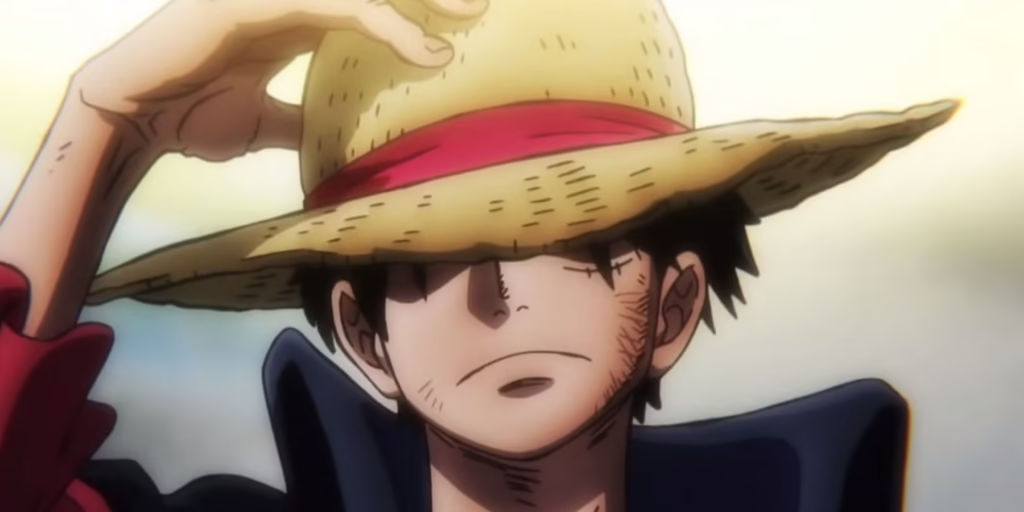
A key strength of One Piece is its richly developed characters. Luffy starts as a carefree dreamer and gradually grows into a powerful leader. He learned new techniques (such as Gear Fourth and the legendary Gear 5), and by the latest story arcs has achieved Yonko status meaning he is officially one of the Four Emperors of the Sea. His unwavering determination and moral code (protecting friends and innocent people) define the series’ spirit.
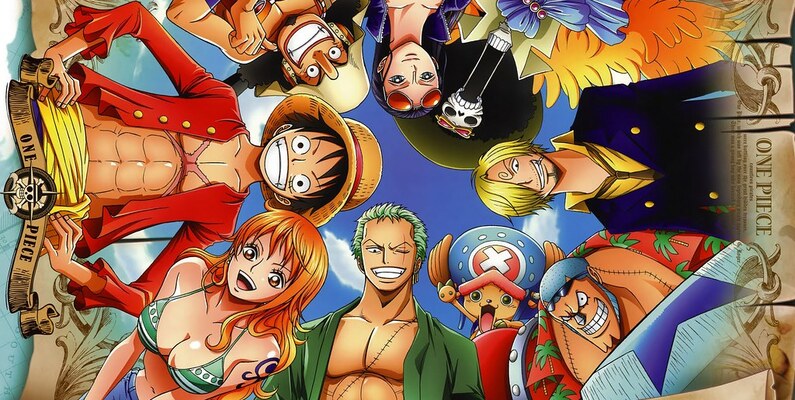
Luffy’s early crew members each have compelling arcs: Zoro was a bounty-hunting swordsman who aspired to be the world’s greatest swordsman; Nami was a clever thief haunted by a fish-man pirate’s cruelty; Usopp was a timid sharpshooter who dreamt of being a brave warrior of the sea; Sanji was a cook whose family rejected him for his love of the ocean. Over time, they all grow significantly. For example, Nami overcomes her fear and loyalty to Arlong to fully trust her new family, and Robin overcomes a lifetime of isolation (introduced in the Water 7/Enies Lobby arc) to become open and optimistic with the crew. Newer members also have strong stories: Chopper the reindeer doctor confronts prejudice on Drum Island, Franky the shipwright resolves his tortured past in Water 7, Brook the musician overcame loneliness on Thriller Bark, and Jinbe the helmsman reconciles his former warlord status to fully join Luffy’s cause.
By the current final saga, the Straw Hats have accomplished incredible feats together. They have challenged emperors of the sea, revolutionaries, and the government itself. Each member’s bounty (the in-world measure of their notoriety) has climbed into the hundreds of millions, reflecting their power. The series often highlights how the crew’s personal dreams and strengths complement each other (for example, Zoro’s loyalty and willingness to sacrifice himself to save Luffy). This strong emphasis on character growth and camaraderie is a major reason why fans connect so deeply with the series.
Animation Style and Production
The One Piece anime is produced by Toei Animation, known for long-running anime series. Early episodes (late 1990s/2000s) had a classic hand-drawn look: bold outlines, vibrant colors, and highly expressive “impact frames” used during big punch scenes. As the series has progressed, the animation style has evolved with technology. Around the late 2000s (Marineford and Post-time-skip), the art became cleaner, with sharper character designs and layered backgrounds. Modern episodes (especially in the Wano and Egghead arcs) use digital coloring, dynamic camera angles, and even 3D background elements to enhance the visuals. In these recent episodes, fans note that the lighting is more luminous, the colors richer, and the animation smoother overall.
This polished style can make big battles feel cinematic. Directors like Tatsuya Nagamine (a One Piece director) pushed for higher animation quality during major arcs, as noted by fans. For example, the climactic fights in the Egghead arc showcase fluid motion and clever use of CGI for effects like Luffy’s Gear 5 abilities. Toei has found a balance between Oda’s original manga art which is very energetic and slightly chaotic and a refined animation that appeals to a global audience. In short, One Piece’s animation has kept improving over two decades. It maintains the series’ distinctive style (big reactions, cartoony humor frames, and lively background creatures) while using modern techniques to keep each episode visually engaging.
Cultural Impact and Legacy
One Piece’s cultural impact is immense. Critics and fans often cite its deep storytelling and humor: “One Piece has received praise for its storytelling, expansive worldbuilding… and is regarded by critics and readers as one of the greatest manga series of all time”. Its influence on manga is clear many later pirate or adventure stories draw inspiration from its themes of freedom and friendship. The series has also had concrete commercial impact. By 2022, One Piece had sold 516.6 million copies, making it the best-selling manga and comic series ever. It holds publishing records like the largest initial print run in Japan.
Beyond sales, One Piece has a massive global fanbase. Its characters are iconic; cosplayers worldwide dress as Luffy, Zoro, and others at conventions. The franchise’s merchandise (figures, clothing, even food crossovers) is extremely popular. It regularly trends on social media, especially when major story events (like new chapter releases or anime premieres) occur. Major publications note that One Piece helped pave the way for the worldwide popularity of anime, alongside series like Dragon Ball and Naruto.
Recent adaptations have amplified its reach. The 2023 Netflix live-action series was a global hit with 71.6 million views in just a few weeks showing that new audiences want to experience One Piece’s story. The anime itself remains one of the longest on TV, often topping the charts in Japan and ranking high on streaming platforms worldwide. This enduring relevance means that even “new” fans today are joining a series that perennially has buzz.
Why One Piece Remains Relevant
After nearly three decades, One Piece remains relevant for several reasons. First, its themes are timeless: loyalty, dream-chasing, and standing up to injustice speak to any generation. Every arc introduces a new island and challenge, so viewers can jump in at many points (though the story is sequential). The cliffhanger-ending chapters and episodes keep anticipation high. Also, as Luffy’s journey nears its end (the Final Saga began recently), long-term fans feel a sense of excitement to see how decades of foreshadowing conclude.
From a production standpoint, the anime has not stagnated. It adapts new material with high quality, and the live-action adaptation has drawn new eyes to the franchise. Streaming availability on platforms like Crunchyroll, Netflix, and others means it’s easier than ever to watch. In summary, One Piece has built such a rich world and loyal fanbase that it keeps regenerating enthusiasm. Its blend of action, humor, heart, and mystery ensures it appeals both to new viewers and to long-time fans looking for the next big story moment.